
How to Get More Customers from Google in 2026: A Local Business Owner’s Guide
How to Get More Customers from Google in 2026
If you’re wondering how to get more customers from Google, you’re not alone. Many local businesses want more calls, website visits, and enquiries but aren’t sure where to start. The good news is that you can improve your online visibility by optimizing your Google Business Profile, using local SEO, collecting genuine customer reviews, and making your website more helpful to potential customers. In this guide, we’ll explain practical steps you can start using today.
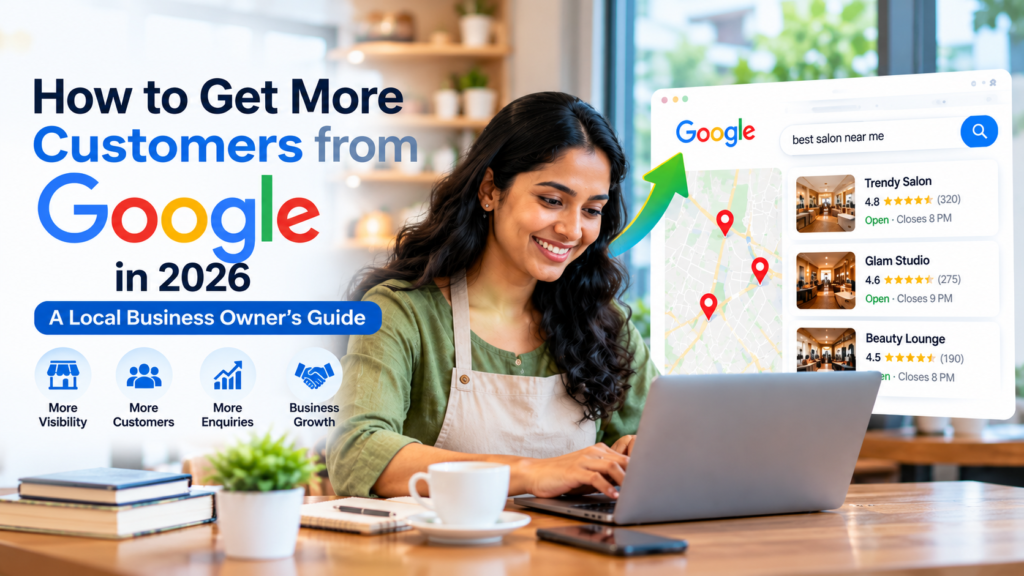
1. How to Get More Customers from Google with Local SEO
Think about the last time you searched for a business nearby and how to get more customers from Google. You probably checked its location, opening hours, photographs or customer reviews before deciding whether to visit.
Your potential customers do the same thing.
A Google Business Profile helps eligible businesses share important information on Google Search and Google Maps. If you run a clinic, salon, gym, restaurant or retail shop, keeping this information accurate can make it easier for people to learn about your business.
What should you update?
Start with the basics. Check that your business name, phone number, opening hours, website and address or service area are correct.
Next, look at your photographs. Are they recent? Do they show what customers can actually expect? A restaurant could upload pictures of its dishes and dining area. A fitness centre could showcase its equipment and training space.
You should also review your business category and service descriptions. Choose options that accurately represent what you offer rather than adding unrelated categories to attract more searches.
One small detail worth checking is your holiday schedule. Incorrect opening hours can frustrate customers who travel to your business expecting it to be open.
Remember: Google Business Profile optimization is not about filling in information for the sake of it. It is about helping potential customers make an informed decision.
2. Use Local SEO to Reach People Near You
Suppose you own a gym in Nagarbhavi. Someone living nearby searches for a gym that fits their budget and schedule. Wouldn’t you want your business to be one of the options they discover?
That is where local SEO for small businesses becomes useful.
Local SEO focuses on improving your visibility when people search for businesses or services in a particular area. It involves your website, business information, relevant content and overall online reputation.
Choose keywords your customers actually use
Avoid guessing what people search for. Think about the words a customer would type when looking for your service.
For example:
A salon owner might target “salon in Nagarbhavi”.
A restaurant could research “family restaurant in Bangalore”.
An interior designer might target “interior designer in Bangalore”.
A digital marketing agency could research “digital marketing services for small businesses”.
These are starting ideas, not confirmed low-competition keywords. Use a keyword research tool to check search demand, competition and intent before selecting your targets.
Where should you use these keywords?
Include your chosen phrase naturally in the relevant page title, main heading and service description. Explain what you offer, who you serve and how customers can contact you.
If you serve multiple locations, create separate location pages only when you can provide useful, genuinely different information for each area and how to get more customers from Google. Repeating the same content while changing only the city name is unlikely to give customers much value.
The aim is simple: help Google understand your services and help people decide whether your business is right for them.
3. How Customer Reviews Help You Get More Customers from Google
Would you feel comfortable trying a new business if you knew nothing about its service quality? Many customers look at reviews before making that decision.
Reviews give people an idea of other customers’ experiences. They can also help you identify what your business does well and where you could improve.
How can you get more honest reviews?
After completing a service, politely ask the customer whether they would be willing to share their experience. You can send them a direct review link to make the process easier.
For example, a salon could send a short follow-up message after an appointment. A home service professional could ask for feedback after completing a job.
Respond to reviews as well. Thank customers for positive feedback, and handle complaints calmly. If someone raises a genuine problem, explain how you intend to address it without sharing private customer information.
Never purchase fake reviews or offer incentives in exchange for positive ratings. Ask for honest feedback without pressuring customers.
A strong reputation is built through consistent service, not just the number of stars displayed on a listing.
4. Make Your Website Work Harder for Your Business
Getting someone to visit your website is only half the job. What happens when they arrive?
Imagine a potential customer visiting your website on their phone. They want to know what you offer and how much effort it will take to contact you. If your services are unclear or your phone number is difficult to find, they may leave.
Your website should make the next step obvious.
Give visitors a reason to contact you
Start with your homepage headline. Instead of a vague statement such as “Welcome to Our Website”, explain what you do.
For example, a local interior design business could write: “Interior Design Solutions for Homes in Bangalore.”
Add clear service descriptions, genuine project photographs and an easy-to-find contact option. If you accept bookings, make the booking process straightforward.
Mobile usability matters too. Test your website on a phone. Can visitors read the text without zooming? Do the buttons work? Does the contact form submit correctly?
It is also worth checking page speed, broken links and whether important pages can be indexed by Google.
If your website attracts visitors but receives few enquiries, review the user experience before assuming that you simply need more traffic.
5. Write Blog Posts That Answer Real Customer Questions
You do not have to publish an article every day to build a useful blog. Start by answering the questions people ask before choosing a business.
For example, someone considering a gym may want to know what to check before joining. A restaurant customer may be looking for family-friendly dining options. A business owner may want to understand whether SEO or Google Ads is a better use of their budget.
These questions can become helpful articles that introduce your business to people who are still researching their options.
Blog ideas for local businesses
How to Choose the Right Salon for Your Needs
What to Check Before Joining a Gym
Questions to Ask Before Hiring an Interior Designer
How Restaurants Can Improve Their Online Visibility
How Small Businesses Can Get More Website Enquiries
How Much Does Digital Marketing Cost for a Small Business in India?
Choose topics that relate to your audience and services. Include practical examples, explain the steps clearly and link to relevant service pages.
For Manjuspark.com, useful topics could cover local SEO, website optimization, social media management, Google Ads and lead generation.
Avoid writing an article just to repeat a keyword. Give readers information they can use, even if they never become your customers.
For further guidance, visit Google Search Central’s SEO Starter Guide.
6. Use Social Media to Show People What You Do
A potential customer may discover your business through Google and then visit your Instagram page to see examples of your work. Your social media presence can help reinforce their decision.
You do not need to post complicated content every day. Focus on showing what your business does and answering questions your audience cares about.
A salon could share hair-care tips and examples of its work, with customer permission. A restaurant could post short food videos or introduce a new menu item. An interior designer could explain how a room was planned and why certain design choices were made.
What should you post?
Try rotating between useful tips, project examples, customer questions, behind-the-scenes content and service explanations.
Include a clear next step when appropriate. That could be visiting your website, checking your services or contacting your business.
Keep your business information consistent across your website and relevant profiles.
Social media does not guarantee higher Google rankings by itself. Its value lies in helping people discover your work, understand your business and feel more confident about contacting you.
7. When Should You Consider Google Ads?
Sometimes a business needs enquiries sooner than organic SEO can realistically deliver. Google Ads may help by showing paid advertisements for relevant searches while a campaign is running.
However, spending money on advertising without a plan can become expensive.
Before launching a campaign, decide what you want to achieve. Do you need phone calls, appointment bookings, quote requests or sales? Your campaign should be designed around that goal.
Start with a manageable budget
Choose search terms that closely match your services. Send visitors to a page that answers their question rather than automatically directing everyone to your homepage.
Track calls, form submissions and other meaningful actions. Review whether the enquiries are relevant and whether the resulting customers justify your advertising spend.
For example, if a campaign generates many clicks but few genuine enquiries, investigate the keywords, landing page and conversion process before increasing the budget.
SEO and paid advertising serve different purposes. SEO builds organic visibility over time, while Google Ads can provide paid exposure when configured appropriately. Some businesses use both, depending on their goals and resources.
8. Measure What Is Actually Working
It is easy to spend hours updating a website or creating social media posts without knowing whether those efforts are helping.
You do not need an expensive analytics setup to begin measuring progress. Start with a few useful tools and metrics.
Tools worth checking
Google Search Console helps you understand which search queries bring impressions and clicks to your website. It can also show indexing issues that need attention.
Google Analytics can help you understand website traffic and visitor actions when it is correctly configured.
Google Business Profile performance provides available information about how people discover and interact with your listing.
You can also maintain a simple spreadsheet to record enquiries, where they came from and whether they became customers.
Review the information regularly. If one service page attracts relevant visitors, improve it further. If a blog receives impressions but few clicks, review its title and how well it matches the searcher’s question.
Do not judge your entire strategy by one week’s results. Look for patterns over time and make changes based on evidence.
9. A Practical 30-Day Plan to Get Started
If you are handling your own marketing alongside running a business, a complicated strategy can be difficult to maintain. Here is a more manageable way to begin.
Week 1: Check your online presence
Review your Google Business Profile, website contact details and opening hours. Correct anything inaccurate and identify the main services you want to promote.
Week 2: Improve your local SEO
Research relevant search terms. Update one important service page and make sure your business information is accurate. Ask customers for honest reviews without pressuring them.
Week 3: Publish useful content
Write one blog that answers a real customer question. Share a few helpful social media posts and link the blog to a relevant service page.
Week 4: Review the results
Check Search Console for impressions, clicks and indexing issues. Review enquiries and identify where customers discovered your business.
Then decide what to improve next month. You might need better service descriptions, a clearer contact form, more relevant content or a stronger local presence.
You do not need to do everything at once. A consistent routine is easier to maintain than a burst of activity followed by months of inactivity.
Frequently Asked Questions
1. How can I get more customers from Google for free?
Start by improving your website, maintaining an accurate Google Business Profile if your business is eligible, publishing useful content and encouraging honest reviews. These steps can help people discover your business, although rankings and customer enquiries are never guaranteed.
2. How long does local SEO take to work?
There is no fixed timeline. Results depend on your starting position, competition, website quality and other factors. Some improvements can make your business information more useful immediately, while stronger organic search visibility may take several months or longer.
3. Is Google Business Profile free?
Yes. Creating and managing a Google Business Profile is free for eligible businesses. Be cautious of anyone claiming that you must pay Google simply to maintain an ordinary business profile.
4. Can I attract customers from Google without a website?
Yes. An eligible business can appear through its Google Business Profile without having a website. A website can still be useful for explaining services, showcasing projects and collecting enquiries.
5. Should I invest in SEO or Google Ads?
It depends on your budget, goals and how quickly you need enquiries. SEO focuses on organic visibility, while Google Ads provides paid exposure during active campaigns. Compare results and lead quality before deciding where to invest more.
6. What is the most important step in local SEO?
Start with accurate business information and a useful online presence. Then work on your website, customer reviews, relevant local content and customer experience. No single action guarantees a top ranking.
7. Can a small business compete with larger companies on Google?
It is possible, depending on the market and search query. Focus on your actual services, the locations you serve, useful content and genuine customer experience. A smaller business can still be a strong option for customers whose needs match its offering.
Final Thoughts: Help the Right Customers Find You
You do not need to change your entire business overnight to improve your online visibility.
Start with the basics. Make your business information accurate, explain your services clearly, help customers understand what makes your business useful and give them an easy way to contact you.
Over time, use the information from your website and search performance reports to decide what deserves more attention.
If you are a local business owner, focus on becoming easier to find and easier to trust. Those are practical goals you can work towards without relying on a promise of instant rankings.
Want to Improve Your Business’s Online Presence?
At Manjuspark.com, we share practical digital marketing guidance to help businesses understand SEO, social media, website development and online advertising.
If you need help identifying gaps in your current digital presence, explore our services and get in touch to discuss your business goals.
Your next step: Choose one area to improve this week, make the change and measure what happens.